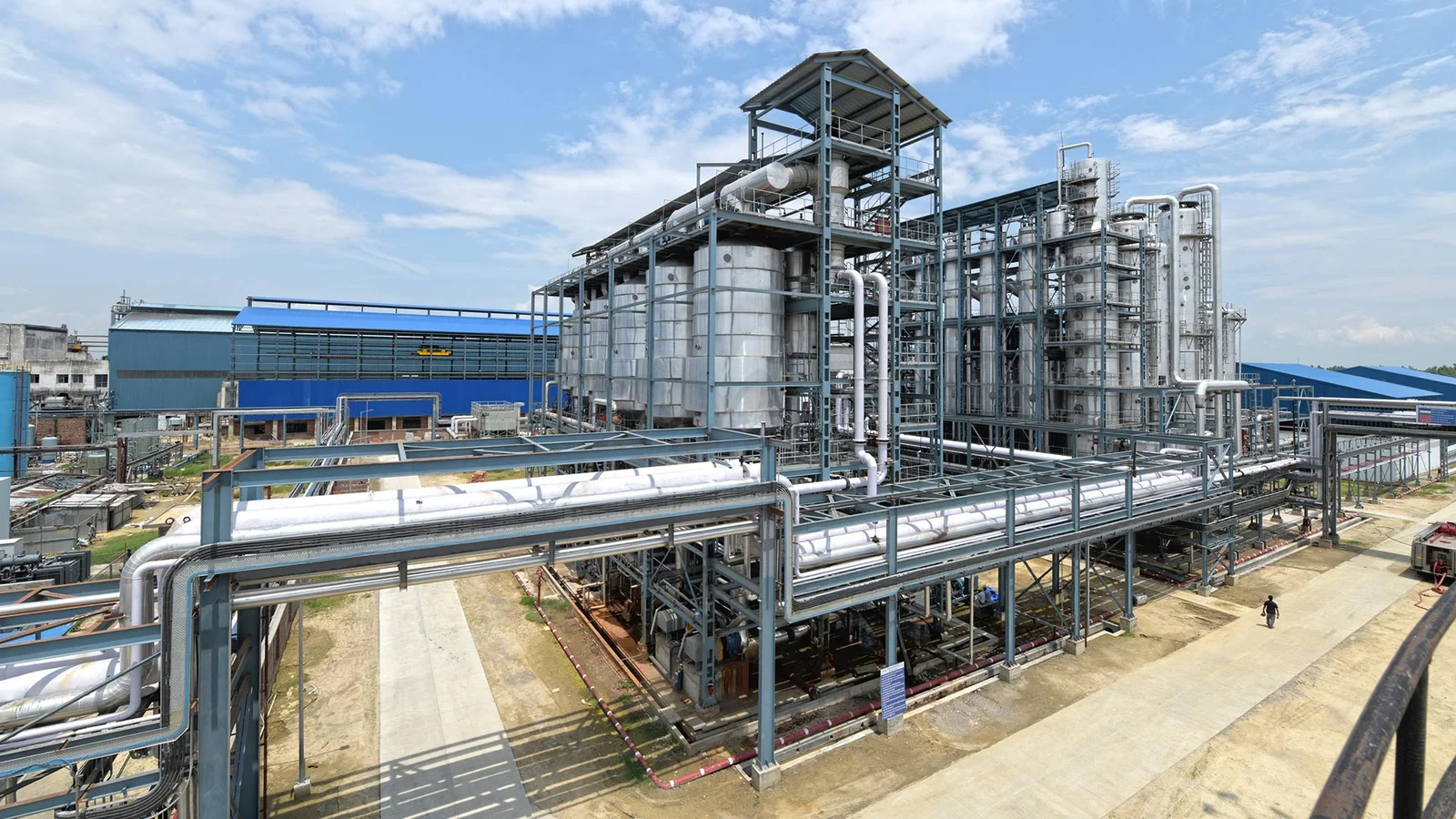
The production of sugar has advanced rapidly in the modern era, and Brazil has led that development for decades. It sequenced the sugarcane genome, created over one hundred strains of the crop, and developed milling and refining methods so sophisticated that refineries often sell excess energy back to the national grid instead of paying for electricity.
Brazil also invented VHP raw sugar — a raw product with a minimum sucrose content of 99.4%. To make it, raw cane juice is heated to the point where sucrose crystals form; the juice is cooled, the crystals form, and solution and crystals are separated by centrifuge — the molasses spun away from the sugar.
Before VHP, raw cane juice was simply boiled down to a dark brown natural sugar full of contaminants and mixed with molasses, requiring heavy processing to refine into the sparkling white ICUMSA 45 that now dominates the developed world as the sweetener of choice.
Capacity in this industry is its own discipline: output depends on daily cane crushed, the recovery rate driven by cane quality, and the length of the crushing season. Cane does not travel far — geography decides what a mill can promise. Ours lets us promise a great deal.
We ship from the ports of Santos and Paranaguá on FOB, CIF or C&F terms, to any safe world port. Standard shipment window is 15–30 days from an operative financial instrument.
Sugar (sucrose) is a naturally occurring carbohydrate found in all fruits and vegetables, produced by photosynthesis — and found in its highest concentrations in sugarcane and sugar beets. Refining separates that natural sugar from the rest of the plant:
Sugarcane is pressed to extract the juice.
The juice is boiled until it thickens and sugar begins to crystallize.
Crystals are spun in a centrifuge to remove the syrup, producing raw sugar.
Raw sugar is shipped to a refinery, washed and filtered to remove remaining non-sugar ingredients and color.
The refined sugar is crystallized, dried and packaged — ready for export.
Beet sugar processing is similar but continuous, without a raw-sugar stage: beets are cleaned, sliced and immersed in hot water to extract the sugar-rich juice, which is then purified, filtered, concentrated and dried. And granulated sugar itself is simply pure sucrose crystals — divided into seven commercial categories by crystal size, each offering distinct functional qualities for the food processor.
Independent SGS examination at the loading port — at our cost — guarantees buyers receive exactly the grade and quantity they negotiated. Unique inspection requirements? Tell us before you order, and we will meet them.
| Polarization | 99.8% min |
| Ash content | 0.04% max |
| Moisture | 0.04% max |
| Reducing sugar | 0.05% max |
| SO₂ | 20 mg/kg max |
| Magnetic particles | 4 mg/kg max |
| Solubility | 100% dry & free-flowing |
| Sediments · smell | None · odor-free |
| Radiation | Within international limits |
Send your grade, quantity, destination and preferred Incoterm — the export desk responds with a firm offer and draft contract.